S8 #11 When AI joins the org chart: Governing AI coworkers at scale
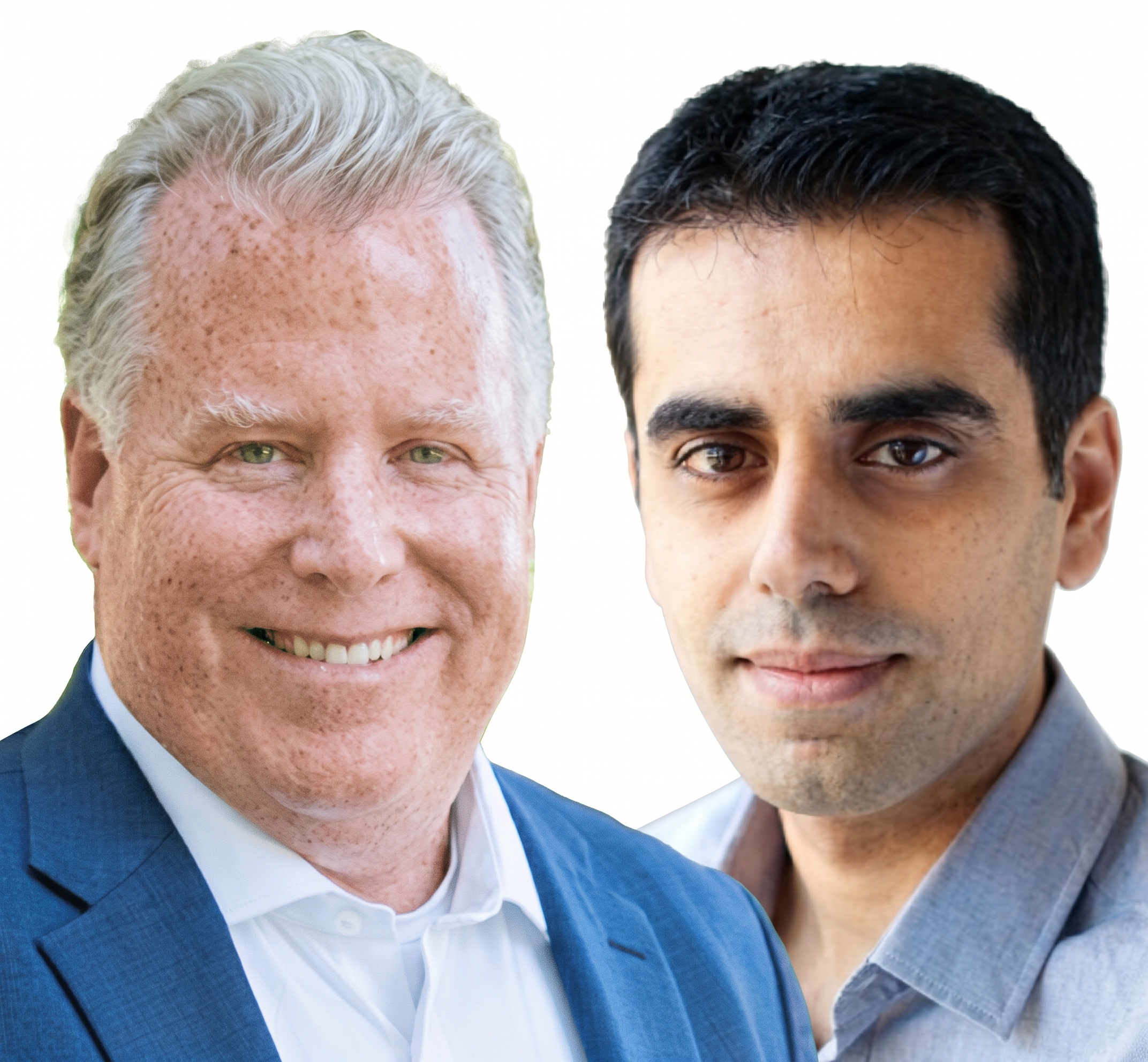
Mike Sullivan and Vinay Gidwaney
Mike Sullivan
Mike Sullivan is Co-Founder and Chief Growth Officer of OneDigital, where he has spent more than two decades helping build and scale the organization through strategic growth, partnerships, and expansion. With more than four decades of experience at the intersection of business strategy and the evolving workplace, Mike brings an executive perspective to the challenges leaders face as AI transforms how organizations operate. He is the co-author of Workforce Intelligence, a people-first framework for leading organizations through AI transformation, based on OneDigital’s experience implementing AI across its 6,000-person workforce.
Vinay Gidwaney
Vinay Gidwaney is Chief Product Officer at OneDigital, where he leads the development of technology and AI solutions designed to transform how people work. As co-author of Workforce Intelligence, Vinay brings a product and technology perspective to the shift toward human-AI collaboration, drawing on OneDigital’s experience building and implementing AI coworkers across its organization. His work focuses on how companies can move beyond simply deploying AI tools to thoughtfully integrate AI into their workforce while keeping human judgment and leadership at the center.
Most of the conversation about enterprise AI is still about adoption: how to get employees to try it, how to overcome resistance, how to build fluency. In this episode, Kristina Podnar argues that a harder set of questions sits right behind adoption. Once employees are using AI at scale, you are no longer managing a rollout—you are managing authority, accountability, delegation, supervision, and what happens when the technology produces a bad answer. Her guests have been living those questions inside a company of more than 6,000 people. Mike Sullivan, co-founder and chief growth officer of OneDigital, describes the overnight exercise that showed roughly 1,800 of the company’s jobs were exposed to AI disruption—and how that moment shifted OneDigital from thinking about headcount to thinking about the faces of its people. Vinay Gidwani, OneDigital’s chief product officer, explains why he concluded that treating AI as software would get it wrong, and why the company instead treats AI as a source of talent.
That framing is not just a metaphor. Each AI “coworker” at OneDigital starts with a written job description, passes a hiring process that tests its capabilities and accuracy, and is assigned a human supervisor who is accountable for its performance. Mike and Vinay walk through Ben, the employee-benefits coworker used by 1,600 consultants in thousands of chats a day, and Shelly, the senior consultant who became Ben’s full-time manager. Kristina presses on the governance details that matter to anyone writing digital policy: where an AI coworker’s authority is written down, how to tell meaningful human judgment from a rubber stamp, why the LLM is never allowed to do the math, how Ben is recertified as models change, and why OneDigital has deliberately tiptoed into agentic AI. The conversation closes on the questions organizations have not yet answered—what happens to the judgment Shelly has embedded in Ben if she leaves, and how to get the most value from an hour of human labor working alongside AI. As Mike puts it, AI can make us more capable. We must decide what comes next.
[00:00:00] INTRO: Welcome to The Power of Digital Policy, a show that helps digital marketers, online communications directors, and others throughout the organization balance out risks and opportunities created by using digital channels. Here's your host, Kristina Podnar
[00:00:19] KRISTINA: There's a lot of conversation right now about AI adoption, things like how do we get employees to use AI? How do we overcome resistance? How do we build AI fluency? Very important questions, and I know that a lot of us are dealing with those at the moment. But I think there's a harder question sitting immediately behind those questions, and it's really about what happens when my employees actually start using AI at scale.
At that point, you're no longer really dealing with primary adoption. You're dealing with authority, accountability, decisions about work delegation, what still requires human judgment, who supervises the technology, what happens when it produces a bad answer, and really fundamental governance issues.
My guests today have been dealing with these questions inside a company of more than six thousand people. I'm super excited about this because we need to hear from more practitioners who are willing to share those insights and those answers. So we have with us Mike Sullivan. He is the co-founder and chief growth officer at OneDigital, where he has spent more than two decades helping build and scale the organization.
And we also have Vinay Gidwani, who is OneDigital's chief product officer, and he leads the development of technology and AI solutions across the organization. Together, they recently co-authored Workforce Intelligence: The People-First Playbook for Leading Your Company Through AI Transformation. One of the ideas at the center of their work is provocative in many ways, I think.
It's really about stopping, just AI thinking around AI for AI's sake or technology. Stop treating it as software and start thinking about it as part of the workforce. So Mike, Vinay, welcome to the Power of Digital Policy. Thanks for coming o- on.
[00:02:00] MIKE: Thanks for having us. Nice to be here.
[00:02:02] KRISTINA: All right, Mike, I'm gonna start off with you first. I think it's an interesting part of the story, which is you've talked publicly about looking at AI, running the numbers, and initially calculating that something like a quarter of the workforce could potentially disappear. What did you see in the work that made you think that, like, 25% of the workforce or potentially 25% of people doing work today could go away?
[00:02:28] MIKE: So I had this moment where the drumbeats across the globe were that jobs were going to be significantly impacted, and it was probably about 15 months ago. So I took literally from 8 o'clock in the evening till 8 o'clock in the morning. I tried to coalesce around all the latest research that was available from all of the leading think organizations around the globe. Vinay had taught me how to use a software that builds software application, and it ended up creating this disruption tool that took into took into consideration all of this research, and over that evening came to the conclusion that disruption was going to meaningfully impact insurance and financial services. For all intents and purposes, we're in the advice-giving business, and AI can impact advice fairly significantly. So the disruption calculator, I just ran one company through it, and it was our own company, and it basically said, "Of the 6,000 people that you have today, you should expect disruption in the neighborhood of 1,800 jobs." And it was at that moment that... it was specifically meant to calculate headcount. And what I vividly remember in talking to Vinay about is you all of a sudden go from thinking about headcount to thinking about the faces of the people inside your company, and everything changes. So what cascaded there was a whole different way of thinking about what we're doing, how we're doing it, and we needed to get-- go from playing defense to playing offense, and that's what Vinay and I have basically been doing ever since.
[00:03:58] KRISTINA: Out of curiosity have the job descriptions materially changed, and have you been thinking about, how do you really think about reducing those backfills, and have you started even thinking about maybe not hiring for certain roles as you make this transition?
[00:04:14] MIKE: Well, basically what I would say is that Vinay was very instrumental in us coalescing around what we refer to as coworkers, and those coworkers work in tandem on teams with jobs that have the highest density of numbers. So for instance, the first coworker that we built a resume for created an internship, then an apprenticeship, then turned it into a full-time employee, a full-time coworker. There are sixteen hundred OneDigital consultants that engage with that coworker every single day. And so we determined that if you create an environment where you go to your people and say, "Look, we're trying to take off of your plate some of the grind, some of the analysis, some of the research, the synthesizing of information, so that you can spend much more time with clients inside clients' fort walls. Let's reshape how work gets done." And that coworker structure has fundamentally reshaped how work gets done inside our organization, but it's all about amplifying our people, not extraction
[00:05:22] KRISTINA: Vinay, Mike just said a number of times sort of coworker, and that sounds interesting to me because coworker is still technology. From the product side, do you begin with the technology and ask where it can help? Or how do you decide what AI should never do, even if it's technologically possible?
[00:05:42] VINAY: That's a great question, Kristina. I've been a technologist for all my life, and this was the first time that I looked at a piece of technology and said, "If I think of this as a piece of technology, I'm gonna get this wrong." And it was immediately clear, and I think at this point anybody who uses AI on a regular basis can see this, that this technology is fundamentally different. It shows up very different within your life and within your corporate enterprise. And if we apply the same technology deployment playbook to this, we would either have it run rampant in a way that we don't want it to, or we would under-utilize its effectiveness or its impact within the organization. So we initially took a very different point of view, which was to think about this as talent. Mike sort of alluded to there the idea that we have these coworkers and we hire them. We actually take them through a pretty straightforward but detailed hiring process that mimics exactly what we do with humans. So when we think about governance around AI, we actually approach it from the point of view of how would you help your employees be successful? What are the policies and the systems and the people that are involved in doing that? And applying those same ideas to AI. If you just replace the word AI with coworker and think of it as another source of talent within your organization, you actually start to look at governance, I think, a very different way. And we can touch on a lot of those things. But I think the, the initial concept of this being a, a talent source rather than a technology framed it in a very different way for us.
[00:07:28] KRISTINA: I like that because I think the moment I hear AI coworker, my policy brain goes somewhere very specific. In my mind, a coworker has a job, a job has responsibilities, responsibilities imply authority, including an org chart potentially. Authority needs boundaries obviously. So when you create an AI coworker at OneDigital, where's its authority actually written down? What can it do? What can it not do? And how did you figure out the whole policy and governance piece?
[00:07:59] VINAY: Yeah, it, it's a great question, and we actually do, again, think about the coworker as having a job. So when we think about use cases, what... sort of a typical starting point for any piece of technology is, okay, what problem is it looking to solve? What job is it looking to get done? We start with a job description. So we write down exactly what we want the qualifications of the AI to be, what kind of job we would like it to do. It looks like a job description that you would post on a job board. It contains the same sort of language. With that job description, we essentially clone a vanilla coworker that we have that just knows about OneDigital, is aware of what we do as a business, is connected into some of our systems, and then we clone that coworker and start to give it the instructions that embody what's in that job description. And then we start to build out the coworker's resume, and we take it through a hiring process where we test its, its capabilities, we test its accurateness, we test whether it's good at doing the job essentially. We even appoint a human supervisor. So a human-- There's essentially a hiring manager, think of it that way.
The human supervisor is responsible for the performance and accurateness of that coworker in perpetuity. So all of us have bosses, right? All of us have good bosses and, and not so good bosses, right? A, a not so good boss is gonna micromanage you and question everything you do. A good boss will start to think about your career in long term, put you in situations where you can learn, give you an opportunity to ask questions and develop your craft. That's exactly what the supervisor is doing for our coworkers. They're helping them get into an opportunity and an environment where they can excel at what they do. Now, clearly, sometimes a coworker will get something wrong, just like a human being does. The good thing with the coworker is that we have a, an incredible amount of auditability and tracking, more than you would ever have of a human, to see what they do and how they do it, and we can then rein that in or retrain them or change that appropriately so that it does a better job. But to answer your question, like again, we think of these coworkers as if they're another type of talent that shows up in the organization, so it's got the same sorts of guardrails, the same sorts of access, the same sorts of responsibility that we would give people. And again, we, we try to govern it in the same way.
[00:10:23] KRISTINA: How does that work out around the soft spots? So for example, Mike and I might talk every day at the water cooler about different things or maybe when we're making our coffee first thing in the morning. And so know that, Mike maybe comes to work 15 minutes always late because he's walking his dog and the dog is elderly and takes him a little bit longer to get there. And we've just gotten into this pattern over the years, so I just never schedule a 9:00 meeting. I schedule maybe a 9:15 or 9:30 meeting. And I know these things because we're human, we chitchat in the hallway. My coworkers, the AI, don't have that context. They don't necessarily walk their dog. They don't understand the water cooler talk. How do you address those aspects that are more of the softer, I can't read this database aspect of work?
[00:11:04] VINAY: Well, look, to be honest, we don't try to address that because that's not really what we're trying to do. What you're referring to is the relationship that, that colleagues have, whether it's in a hybrid virtual environment or in an in-person environment. Those relationships are meaningful. It's from that water cooler conversation that an idea sparks, that a collaboration begins between people. The coworker's not looking to do that. The coworker's there to serve the human. The coworker's there to augment what a human is doing every day. And in fact, the way we think about what coworkers and humans do is we take every job and we break it down to irreducible and reducible tasks.
So the reducible things are the things within your job that AI should be doing, and you can push it over to AI. The irreducible are the things that AI just can't do or shouldn't be doing or won't do a very good job of. You referenced one of those irreducible skills. My ability to build a relationship with a colleague, to talk about different things that matter to us, to then spark ideas and find ways to work together, AI's not gonna do a great job of that, and we don't try to have it good, do a good job of it. But if there are things, part of my job that require analytical skills, require research, require brainstorming AI's gonna do a great job of being a partner with me on those things. And so we try to position it in an appropriate way while keeping in mind that there are things that our people do that are very unique, and they're high qualified and should remain to be things that humans do.
[00:12:35] KRISTINA: So I wanna go to a specific example around this because you talk about Ben and maybe, I don't know, Mike can give us a little bit more background about who Ben is and how you deployed Ben.
[00:12:46] MIKE: Yeah, so we're, part of our business, we're employee benefit consultants, so we help employers with everything to do with building a employee benefit program in the States. And so we're, obviously we're very creative with names, so employee benefit consultant became Ben. Just to give an example, so we took one of our most talented employee benefit consultants in the country and asked her would she consider changing jobs and becoming Ben's full-time manager and teach Ben what, what the attributes of a top consultant need to be, what, feed a library full of information that, that would educate Ben on the job, but then spend the better part of the past three years understanding work product, best practices, building institutional knowledge. So everything that somebody in the consulting business is concerned about, work product and institutional knowledge, and what happens if someone walks out the door we have really coalesced around an amazing success story where we have Ben engaged in thousands of chats a day, where institutional knowledge and best practices are being deployed. And the interesting thing, if there has been anything that, Vinay and I have learned, this is the first time we've put our thoughts into the world in a book, and one of the things we've gotten slammed on is you should not be giving this you should not be anthropomorphizing these technologies. It should not have a name, a face, and a personality. And to that, I would just say not for us. For us, this works extraordinarily well, and at the end of the day, what we're trying to do is we want our people to work with Ben in a collaborative way to push the Ben work. And this is what we've gotten to the point of. Ben does certain work better than you do in your job today. So part of what we're conveying is if you're going to a client without engaging with Ben, you are knowingly going out with an inferior work product. That's a tough thing for people to sort of work through, but it's absolutely a fact. So we have come up with a strategy that basically says, "We are not trying to replace you as a consultant. We are trying to amplify you." But to do so, we need to kind of think about what tasks are, is Ben better off doing, what tasks do we need to explore with you to do more of, and we're going to reshape these jobs. And, and the metaphor we kind of use now is think about it where you may have spent 80% of your time to prepare for the 20% of time you pay, you spend with clients. You may end up spending 80% of your time with clients and 20% of your time preparing for those meetings, and we will be much more dialed in to what to do with those clients. It's that kind of scenario that right, wrong, or indifferent, it works for us
[00:15:39] KRISTINA: Vinay, that's interesting when Mike says, you need to consult with Ben before you kind of deliver a work product because there's an opportunity there to get things better or get it more right. What happens when Ben is wrong? Who decides whether there was a one-off bad answer or a systematic problem? And is it Ben that's checking me? Am I checking Ben? Who corrects the underlying system when it is wrong?
[00:16:02] VINAY: Well, there are technical solutions to that, and then there are behavioral ones. And then there are policy ones, of course. The policy ones are the easiest one to understand, which is that you're responsible for your work product as a human being. If AI is helping you with developing that work product, you are still responsible for that work product, and making sure that everybody understands that they have to put themselves in the loop when it comes to this. And from a technology point of view, there are things that we do at the LLM layer and, and around the LLM itself to ensure that it's correct, and that both comes in with the context setting, the training, the ability to have other AI check the answers of other AI. Like, there's all, all the standard sort of approaches to that.
The more important one is around behavior, and behavior is really in how you frame AI with your people and what they believe that it's meant to do for them. We really break this into two categories. One way we look at AI is that, and a lot of people are in this phase, where they think of it as a transactional tool, that I'm gonna go into AI, I'm gonna have it answer a question for me. I'm gonna treat it like a vending machine. I'm gonna put my coins in, I'm gonna take what I want, and I'm gonna move on with my day. It serves as a better answer engine than Google. Now, the problem is, is that it could be wrong sometimes, and if you just treat the answer as whatever it gives you and not read it or check it or even think about it you're gonna set yourself up for some disappointment. The way that we push people into instead is more of a collaborative relationship with their AI, where it's their going back and forth with AI that matters the most. What I tell people all the time, it's not the answer that AI gives you, it's the thinking within you that it causes. That's the valuable part. And so when we see people using AI in a collaborative sense, they're not thinking of their AI as just this all-knowing thing. They're actually thinking of it as a way to elevate their own understanding. And in order to do that, so say, for example, a consultant is looking at a client's healthcare costs and why they're getting a double-digit increase in premiums. Now, Ben will go and do the analysis on the plan design and figure out different things that may be happening, but it's the human and their interaction with Ben that comes to the conclusion of, "Okay, this is the reason why their plan is outperforming or underperforming. This is the kind of solution I'm gonna bring to my client." Invariably, people will always sort of take the shortcut, right? We're all humans, and we're pretty lazy most of the time. So if AI feels like something that we can just throw something over the fence to and get an answer and not bother we're gonna do that. I, I think that comes a lot with, again, framing this as talent. And we say the same thing. If you're gonna go to a colleague and ask them, "Hey, can you do this analysis for me?" You might double-check their work. Right? Because humans are fallible. They make mistakes. So does AI. And if you think of AI as software, you don't expect software to make mistakes, but if you think about it as talent, you're working with another source of talent. Your expectations, your approach is very different
[00:19:04] KRISTINA: So how do you distinguish within the governance realm, within the policy realm, the meaningful human judgment from a human rubber stamp? So when Ben comes back to me, how does that human get conditioned to not just accept the answer as always credible when the first maybe 149 answers were credible, but the 150th may not be?
[00:19:27] VINAY: Yeah, so some of that has to do a lot with the interface that we put in front of our users, our employees. So when we think about Ben, don't think about Ben as a chatbot. Think about Ben as a what we think of as a sort of center of intelligence. Ben represents the intelligence that we've built within our organization around employee benefits and the managing healthcare costs and so on. That intelligence center is a combination of humans and AI working together to continue building deeper understandings about our clients' challenges and solutions in that area. Now, Ben can show up as a chatbot, where you go back and forth with it and brainstorm on something. Ben also shows up in a, a product that we call Impact Studio. Impact Studio is where you do the deep data analysis around sort of healthcare costs, for example. What we want people to do is to recognize when they go in and ask and Ben to do healthcare analysis in Impact Studio, we've built a lot of software on top of and around Ben to ensure that the result that they get is really accurate, right? So the, the LLM isn't doing the math, so to speak. That software code is doing the math. Ben may be doing the interpretation of the results. And so again, it's really important to say like, "Look, use the chat version of Ben in a, in a sort of collaborative context, but if you need a black-and-white answer, use this other product that we've, we have, which also uses Ben, so we can continue to build that intelligence center, but have it show up in different ways." And that interface really changes how the human approaches it and what they expect out of it.
[00:21:00] KRISTINA: That's really interesting. What's happening under the cover from a technology and data perspective? Because I can imagine maybe a, a scenario where maybe some data package, I don't know from who, if it's from third party or somewhere internally, is corrupted or it's bad data or it just isn't trustworthy data. How do you actually get to the point where you back that out of the whole process, right? Because it sounds like by the time that the employee is interacting with Ben, whatever context that's in, the LLM has actually done a lot of churning of the data.
[00:21:30] VINAY: Yeah. We're really, really careful on the data that we serve into the LLM. So most of these coworkers might have some connection into our data infrastructure, primarily something like connecting to a CRM to go and get the status of a, of a deal or the meeting notes from a previous conversation or something like that. But the know-how of Ben or any of the other coworkers is a very tightly curated Set of knowledge. It is not a free for all and just plug into our systems. In fact, that was one of the early learnings that we had. We're like, "Oh my God, these large language models are awesome. Let's just dump it into Snowflake or dump it into our CRM and let it go wild." And obviously, that never results in anything good because context windows get exceeded, understanding changes, the reference ability, the understanding of, and the chain of thought changes based upon what you give it. All of that gets a lot more complicated with the more data that you give it. And so in the case of Ben, Shelly, the human, is Ben's supervisor. Shelly is the one feeding what Ben treats as golden information. Shelly controls that pivot, right? That pipeline into Ben. Nobody can just come in and train Ben on something because then you're gonna have a lot of issues there. So over now two or three years, there's hundreds of instructions. There are dozens of documents that Ben has access to. There are a couple of live data sources that Ben can access. And then as models change and as instructions change, testing becomes a huge issue. Should we sort of take Ben through, like, a certification exam? As if you, somebody came back to work after six months, you really needed them to make sure they know what, what they're doing. They may take another exam to, to get back to work. Well, Ben goes through a lot of exams. As models change and, and instructions change, we need to be certain that it answers questions correctly.
[00:23:21] KRISTINA: That's an interesting point on testing especially because, we're sort of used to in the traditional context of software deployment testing before something goes live. Does Ben do a regular checkup I guess I shouldn't say regular because let's take a step back. Let's assume that Ben goes to a regular checkup, right? It's the annual wellness check. Is everything working the way that it, it should be working? But if Ben has some chest pains, how does Ben signal to you that maybe he needs to go to the doctor outside of that regular testing cycle?
[00:23:49] VINAY: That's a interesting analogy to think about in the context of what we're doing. But I know what you're saying. So I, I, there's a couple of things. So one is, is that, yes, Ben undergoes regular sort of certification, recertification, and, and again, it comes back to this notion that it's not software, right? Software is designed where you click a button, you get an expected result, and you test for that. Large language models by definition, you're never gonna get the same result, right? It's, it's based upon probabilities and statistics. It's based upon math that results in different output every time. That first of all really makes you think about what is it good for, what is it not good for. To calculate a certain al- algorithm on healthcare costs, we don't do that in an LLM.
We do that with Python code or whatever it may be. Now, the LLM may be the thing that's using the code to do it. An LLM could have even written the code, but we're relying on software code to get the standard reliable output. So there's that notion that, LLMs are good for some things and not good for other things. We do need to make sure that- The human is always there reviewing things, working with the LLM to accomplish a task, and that they're not just pointing the LLM to go do something on their own. In fact, this whole notion of agentic AI is something that we've actually really tiptoed into because the last thing that we want is agents roaming around our infrastructure doing things without much human involvement.
And so when Ben has an issue, right, there are, there are ways in which we understand that maybe a response that somebody had to Ben was not good. Maybe they went back and forth a few times and said, "Ben, that's not correct." We encourage our people to talk to Ben as if they're talking to a person and give the feedback. Now, we have another set of AI, sort of think of them as the AI HR department that helps Shelly manage Ben, so they're reviewing the thousands of chats and so on and looking for opportunities to improve things. We have also got a really vocal, employee population that uses this that will have no qualms about coming back and telling us that this didn't work for them and they need it to be better. And it's keeping that feedback loop open is really important. The,
[00:26:01] MIKE: the thing I would add to that, Kristina, is sort of like very intentionally Ben's never gonna be a first-chair consultant. Ben works for the first-chair consultant. The consultant has all the relationships with the C-suite. The first-chair consultant understands the culture of the organization. The first-chair consultant has all of the context to continue to probe what Ben could yield relative to just raw compute of as many data points as possible to continue to synthesize information and create insight. But the first-chair consultant owns the relationships, owns the final work product, owns everything on a go-forward basis with the client, and that's really an important thing. Like, we are telling our people, think about this. If Ben was human, he would be a really smart second-chair consultant that you went to for a lot of answers to get a lot of the, analysis work done. We're kind of treating it the same way, and it's, it's working very well. But you know, we still have work to do, but we've come a long way in the past three years.
[00:27:04] KRISTINA: I think that, Mike, that's an interesting point, I think, right? It raises an interesting question for me at least, which is this other part of the Ben example, which might be a little bigger than it sounds at the surface, which is, Shelly has this, deep experience, assuming that, Shelly really has this professional efficiency. She's teaching Ben from an AI coworker perspective. But then Shelly decides that there's a different opportunity in a different state, and she leaves OneDigital tomorrow. What happens to the judgment she's embedded in Ben? Is that now institutional knowledge? Does she still own any part of that? Can she take that with her to a new company? Who determines that judgment aspect and whether it's current, not current, is it Shelly's to take or not?
[00:27:50] VINAY: You're asking some really good questions, Kristina, and this is the next level of sophistication that organizations need to think about. So one is that the intelligence that Shelly is putting into Ben... And to be honest, it's not just Shelly. It is a collection of intelligence from a lot of our best consultants. Shelly just happens to be the curator of that. That doesn't just feed into Ben automatically. Shelly is the curator of it. But Ben's intelligence is a codified set of intelligence. It's in fact LLM agnostic, and to some degree, it's harness agnostic. And what that means is we can move Ben's intelligence around the organization into different systems wherever we need to do that. The important point there is it gives us a lot of optionality. So if we want you know- able to embody Ben, we can do that. If we want Astra to embody Ben, we can do that as well. If we want an open source model that is cheaper to run and less powerful, but good enough for certain task, that can embody Ben as well. So we need to be able to move Ben around as much as we can. The question on whether, Shelly thinks, "Okay, I've trained Ben, I can move on to a different organization," okay, so obviously your know-how of your job and moving to another job, you're protected. You could do that. There's no- as long as you're not taking intellectual property or corporate secrets, we're all free to move between employers and take our know-how and knowledge to do that. So there's nothing there that we need to be concerned with or restrictive about. The thing that we do need to think about is, what is the motivation for Shelly to train Ben? How does she think about her own knowledge base and her own experience and career, and having to put that into Ben? There's some real psychological challenges there that we need to work through around employment and how people think about their work.
What I can say is that we're trying to study this. So we do have researchers from MIT and Harvard involved and in our environment, helping us understand what people do and how they think about these things. We have different cohorts that are doing different things and get different messaging. Part of the reason we do that is because we're very open about the learning that we're going through, right? We have 100,000 employers in this country that we support from a workforce point of view. Everybody's gonna have to learn how to do this. OneDigital just happens to be doing a lot of the guinea pigging and learning ourselves, and we're doing that very openly and transparently. But this is a great question for folks to try to understand, and we're not gonna understand it until we try to do it and sort of figure out what works and doesn't work.
[00:30:32] KRISTINA: Mike, I know that this all sort of started with an idea you had and partnering with Vinay to make it a reality. What's the next big idea that you think you have around AI and where you can push it within the enterprise?
[00:30:44] MIKE: I think that what is invariably going to happen is that boundaries are going to change. So the boundaries of our four walls, the boundaries of what we do w- with our clients and for our clients, I think boundaries begin to shift as what's possible begins to change. And so I would say that the last handful of years has been about how do we understand how to get our people to go from transactional to collaborative to co-intelligence, and so we're well on the way on that journey. I think the exploration of what's possible and the exploration of what keeps humans at the top of the stack, we're just beginning to scratch the surface on that, and I think you're gonna see entire industry verticals reshape themselves. I think you're going to see the difference between client and vendor relationships evolve. I think there's all kinds of things that we're just beginning to get our heads around right now that are all expansive, I think, to the possibilities. We talk about maybe with the path we're on, we could truly impact healthcare spend, truly impact a people's, you know, dignity with retirement. I think AI's gonna make things possible we just weren't able to do before. That's what excites me. The challenge we gotta get over, and the single biggest challenge we have right now, Kristina, is the fact that these frontier models are going so fast that they're putting us at danger, and in the workplace, I think we're going too slow to figure out what's possible, and we've gotta reconcile those two things so we make our people feel comfortable that, us getting better at our job I don't think is putting the world at risk. Somehow there's gotta be a balance that we find that everyone gets comfortable with, and that journey I think is gonna be a journey for a long time.
[00:32:40] VINAY: Yeah, I can add to that. One way to put what Mike said is that there's a tremendous amount of money and effort and innovation going towards how to spend a token, what a token is, and how to spend it, and how to get the most value out of every token spent on AI. There isn't enough deeper understanding on how to get the most value from an hour of human labor in support of AI, right? Because labor and the way we work is fundamentally different now because of AI. But the interaction between AI and us as people is changing how we do work and the value of the work that we do, and I think that we have to really dive deep into that and figure that out. By the way, that's the most valuable part of the whole thing, right? AI's gonna be ubiquitous. Everybody's gonna have access to it. There'll be different versions and whatever. But the most valuable thing that you'll have in your company is your people, so investing in the people and figuring out how to make sure that they are succeeding with AI is requires a lot of research and deeper understanding, and that's what we're focused on doing.
[00:33:47] MIKE: We say all the time, Kristina, it's like AI can make us more capable. We have to decide what comes next.
[00:33:54] KRISTINA: I love that. I love it. I think that's a really good place to leave it at. I think that we could probably continue for hours, and I have a ton of other questions for you, Mike, but we'll just have to have you both back on the show at some point to dig deeper on those fronts. For now, Mike and Vinay, authors of The Workforce Intelligence: The People-First Playbook for Leading Your Company Through AI Transformation. What I appreciated about today's conversation is that adoption is really the beginning. As you can tell, this conversation needs to continue. But once AI becomes part of how work gets done, organizations have to answer a much more consequential set of questions. Some of those we just touched upon today, but go grab the book so that you can really dig deep into the other ones. To everybody, thanks for listening. Come join us again on The Power of Digital Policy next time. And Mike and Vinay, thanks for being with us today. Appreciate it.
[00:34:40] OUTRO: Thank you for joining The Power of Digital Policy. To get access to policy checklists, detailed information on policies, and other helpful resources, head over to thepowerofdigitalpolicy.com. If you get a moment, please leave a review on iTunes to help your digital colleagues find out about the podcast.
Feel free to respond to this podcast here:
- LinkedIn: kristinapodnar
- Mastodon: @kpodnar
- Threads: @kristinapodnar
